[26.04] Vision Banana

會生成圖,自然就會看圖
Image Generators are Generalist Vision Learners
在 LLM 領域,我們已經習慣了使用 generative pretraining 出來的模型,會自然而然地獲得語言理解、推理、coding 等下游能力,這些能力並沒有特別被訓練,而是從預測下一個 token 的目標中 emergent 出來的。
那麼同樣的故事是否能套用在視覺領域? 也就是說,當一個 model 被訓練去生成高品質的圖片時,它是否也順便學會了如何理解圖片?
Intro
- 過去的相關工作其實已經有觀察到 generative vision pretraining 的 scaling behavior,但是效果一直追不上 contrastive learning 或是 masked autoencoding 這類非生成式的方法
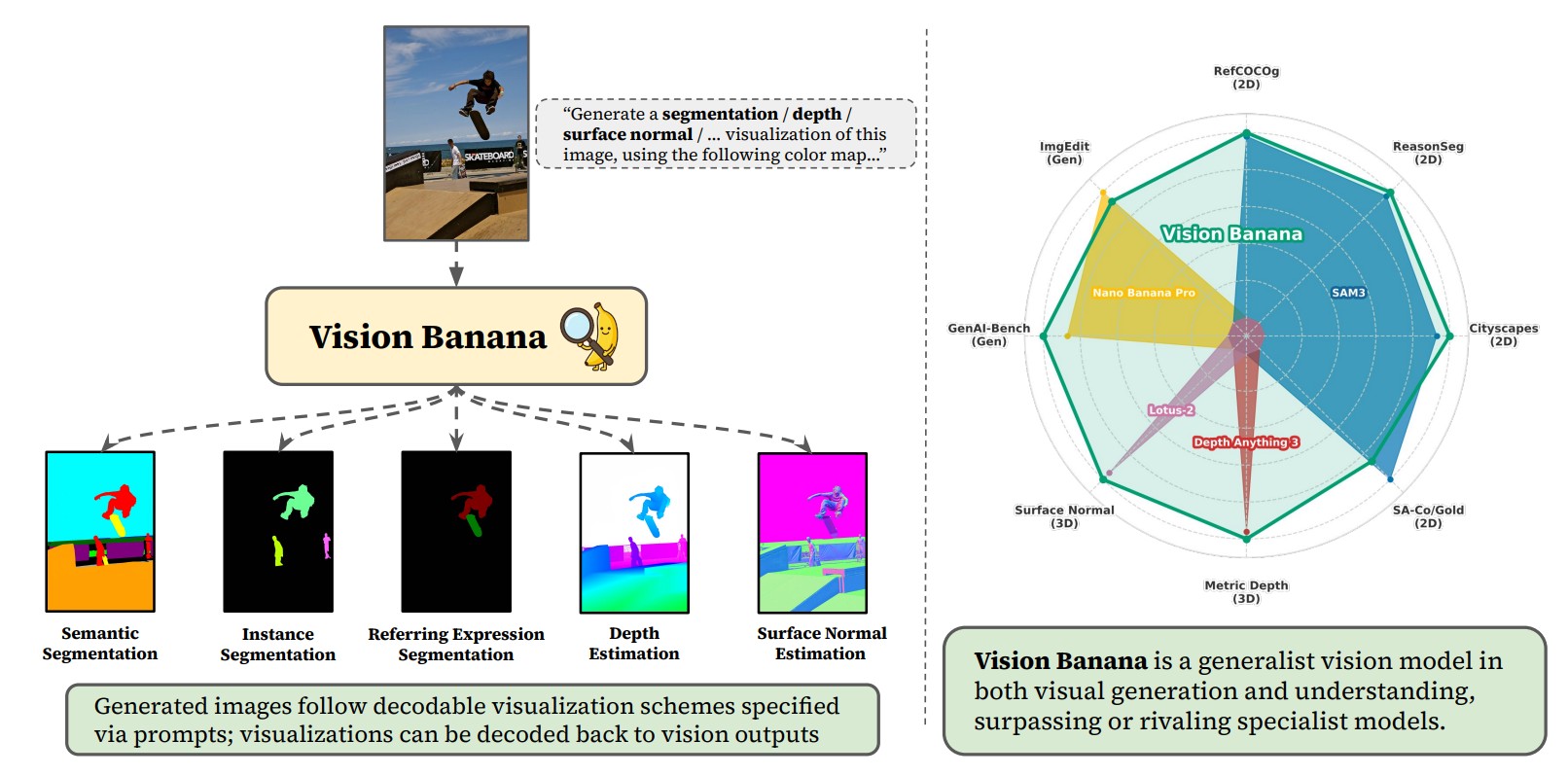
- 本作的主張是: 只要透過適當的 instruction tuning,一個 SOTA 的 image generator (這裡是 Nano Banana Pro) 就可以變成一個 generalist vision model,並且在各種 2D/3D 理解任務上達到或超越專門模型 (specialist model) 的水準
- 這個 instruction-tuned 的模型叫做 Vision Banana
- 關鍵的設計是把所有 vision task 的輸出格式都統一成 RGB image,因為這樣才能直接利用原本 image generator 已有的能力,而不需要去改架構或加新的 head
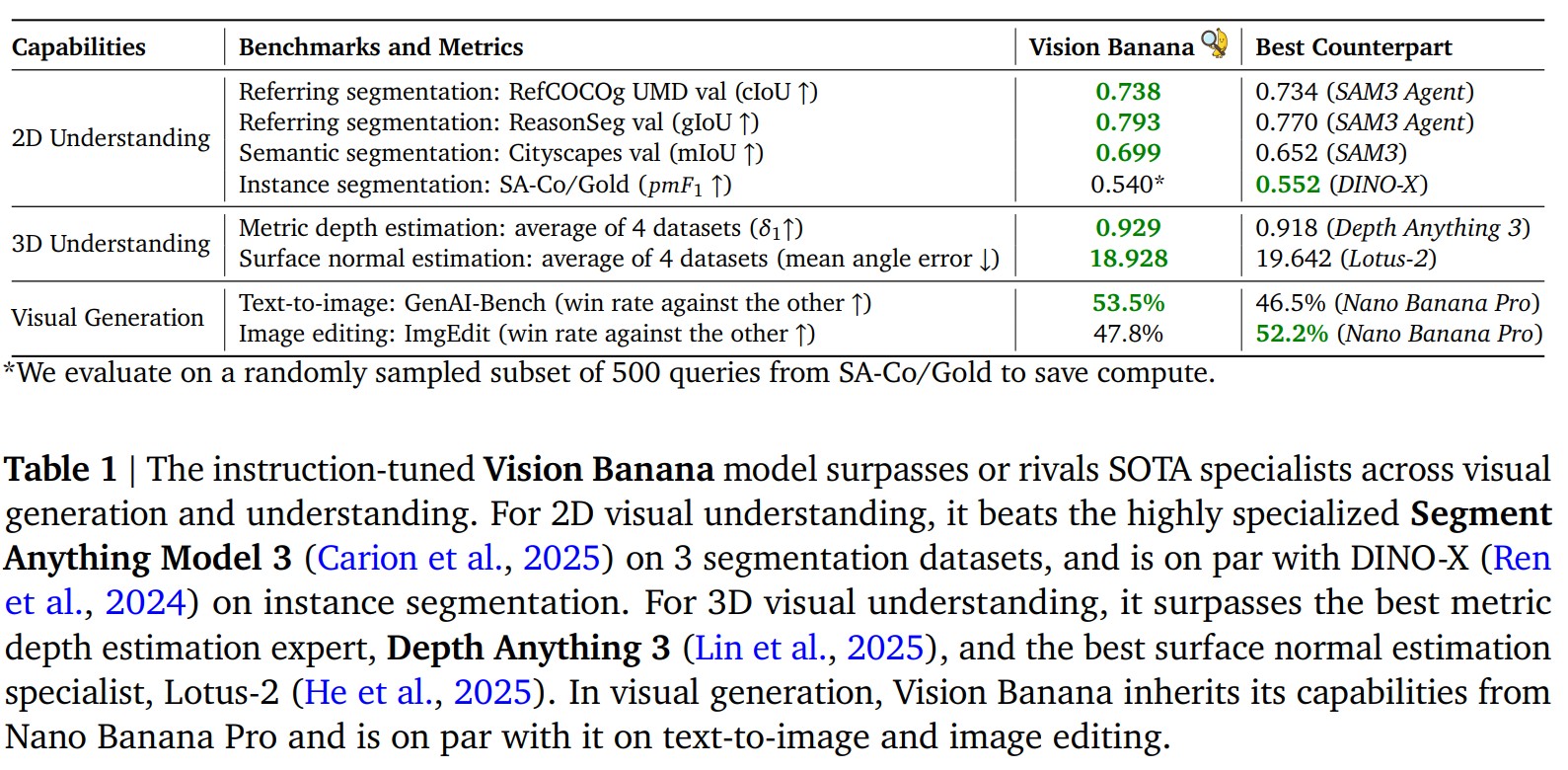
下面兩張圖展示了 Vision Banana 各個領域的能力上的 benchmark 結果,可見除了 Instance segmentation 以及 Image edit 以外他都達到了 SOTA,接下來我們來細看他如何使用圖片生成模型來做這些視覺任務。
Method
為什麼要做 Instruction Tuning?
其實過去的研究就已經觀察到,現代的 image generator 在 zero-shot 的情況下,就有能力生成看起來像 segmentation mask 或是 depth map 的圖。但是問題在於這些生成出來的圖沒辦法被精確地 decode 回實際的 vision output,所以也就沒辦法在 benchmarks 上跟其他模型比較。
舉個例子,你叫模型生成 "depth map",它可能會給你一個很像 depth map 的圖,但是顏色跟距離的對應關係模糊,根本沒辦法量化評估。
所以 instruction tuning 的目的就是: 教會模型按照 prompt 中指定的格式輸出可逆的 visualization。例如:
"Segment the skateboard category in pure yellow (<255, 255, 0>)"
模型生成完圖之後,我們就可以透過 cluster 出 (255, 255, 0) 這個顏色附近的 pixels 來得到 skateboard 的 mask。
Instruction Tuning Recipe
- 把 vision task data 以非常低的比例混進 Nano Banana Pro 原本的訓練資料中,做一個 lightweight 的 finetune
- 這個低比例非常重要,可以確保模型不會忘記原本的 generation 能力,也就是論文中再三強調的「保留 generative prior」
- 訓練資料的來源:
- 2D 任務: 用內部模型對從網路爬來的圖片做 annotation
- 3D 任務: 用 rendering engine 產生 synthetic data
- 不使用任何 evaluation benchmark 的 training split,所以全部都是 zero-shot transfer 的設定
2D Semantic Understanding
Semantic Segmentation
就是傳統的「把每個 pixel 分類到一個類別」任務。Vision Banana 的做法很直接,就是在 prompt 中指定每個類別對應的顏色,然後讓模型生成這張 mask 圖:
"Generate a semantic segmentation visualization image, using this color mapping: {"cat": "red", "lock": "pink", "exit sign": "light purple", "background": "yellow"}."
prompt 的寫法非常彈性,可以用 hex code (#80C000)、RGB tuple (<255, 165, 0>),甚至是用自然語言描述 ("light purple"),模型都能理解。
結果他們在 Cityscapes 上的 mIoU 是 0.699,贏過 SAM 3 的 0.652 (4.7 個百分點),是 zero-shot 模型中最好的,跟 closed-set 的 SegMan (mIoU=0.842) 也只差了 14 個百分點。
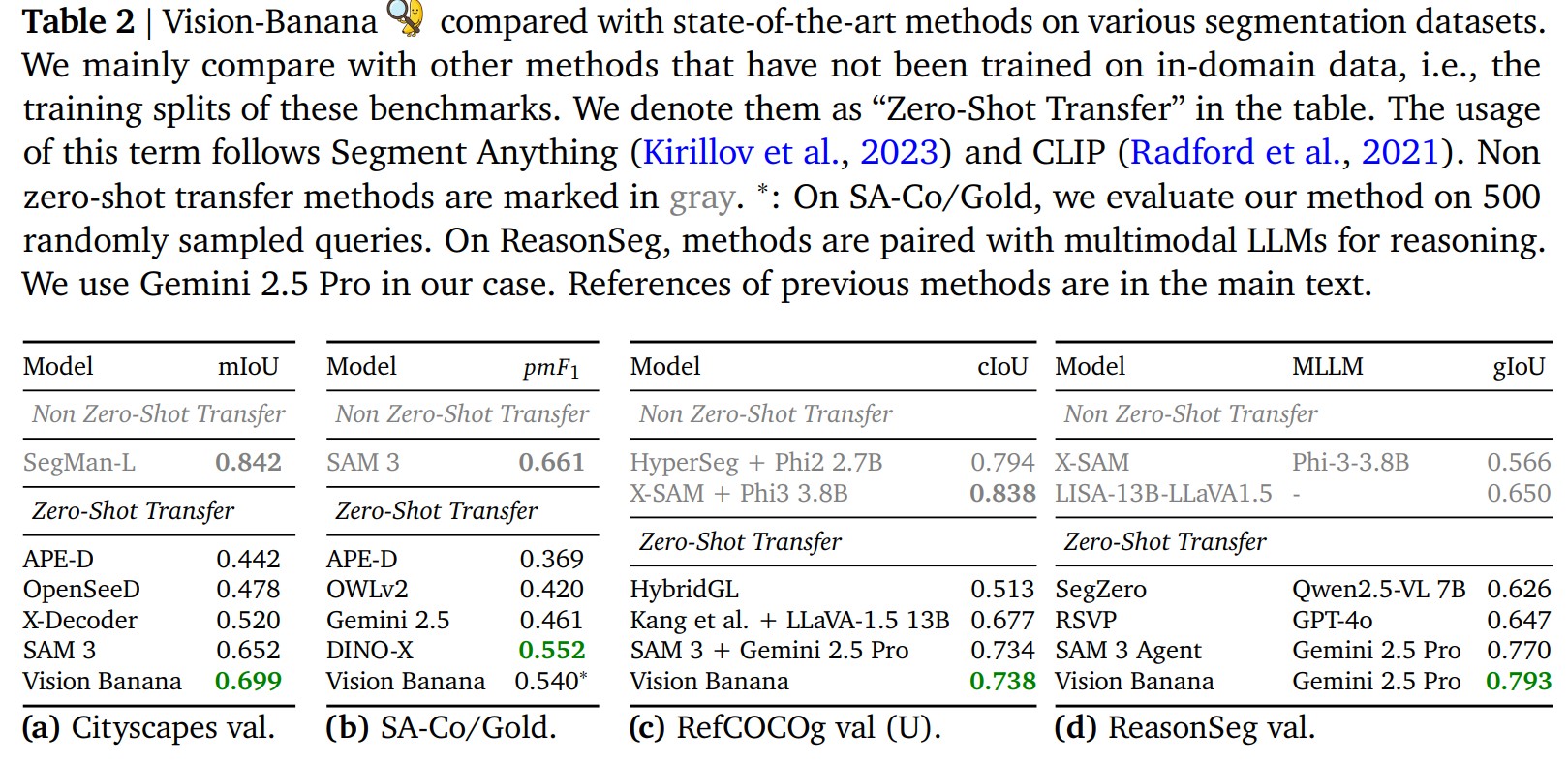
下圖是 Vision Banana 做 semantic segmentation 的範例圖。
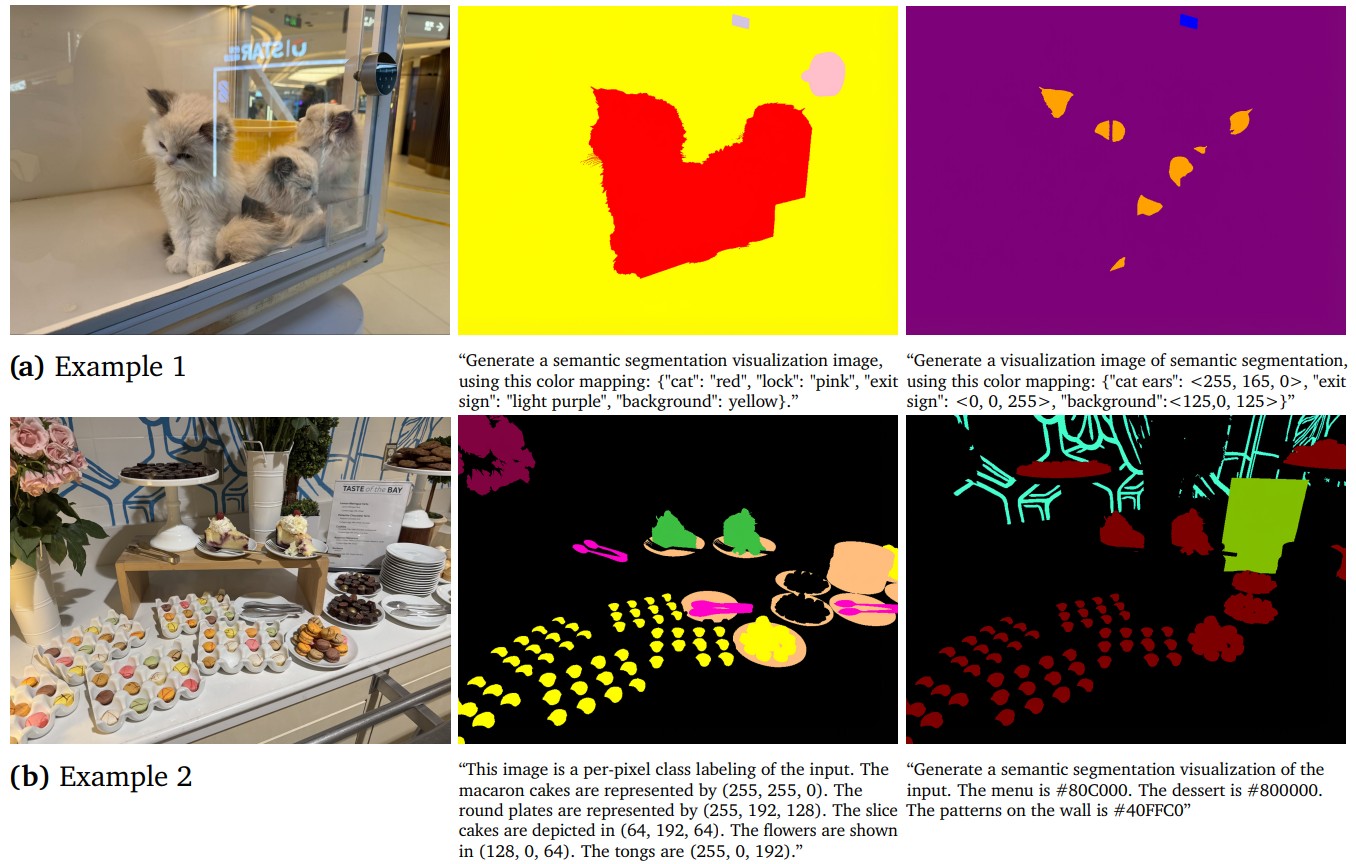
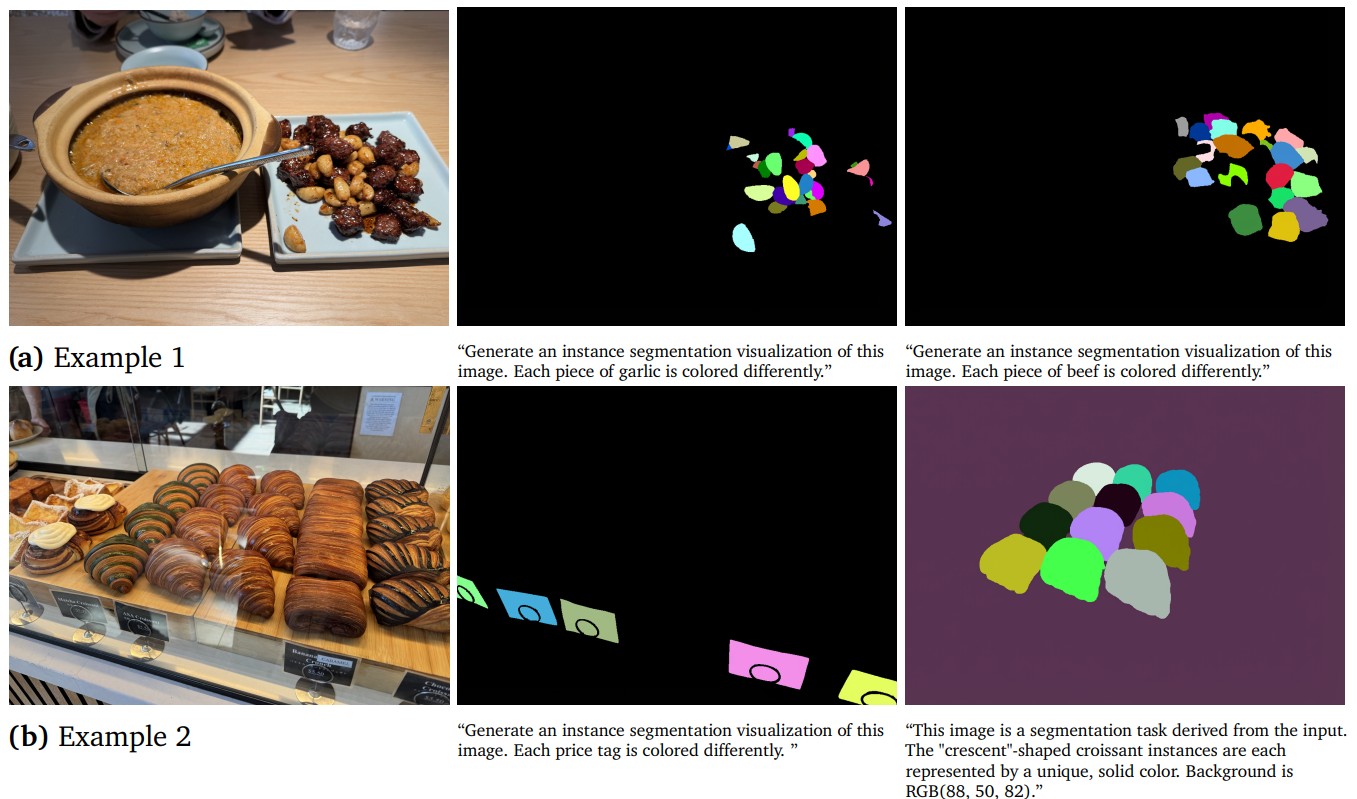
Instance Segmentation
比較棘手的是 instance segmentation,因為事先不知道有幾個 instance,所以沒辦法在 prompt 中先指定每個 instance 的顏色。
他們的解法是 per-class inference: 一次只 segment 一個 class,讓模型動態地給每個 instance 分配不同的顏色。
"Generate an instance segmentation visualization of this image.
Each piece of garlic is colored differently."
評估的時候就用 thresholding 來 cluster 顏色相近的 pixels。
結果在 SA-Co/Gold 上的 是 0.540,跟 DINO-X 的 0.552 相近,但是還是輸給 SAM 3 (0.661)。作者承認 instance segmentation 仍然是個比較難的任務。
下圖是 Vision Banana 做 instance segmentation 的範例圖。
Referring Expression Segmentation
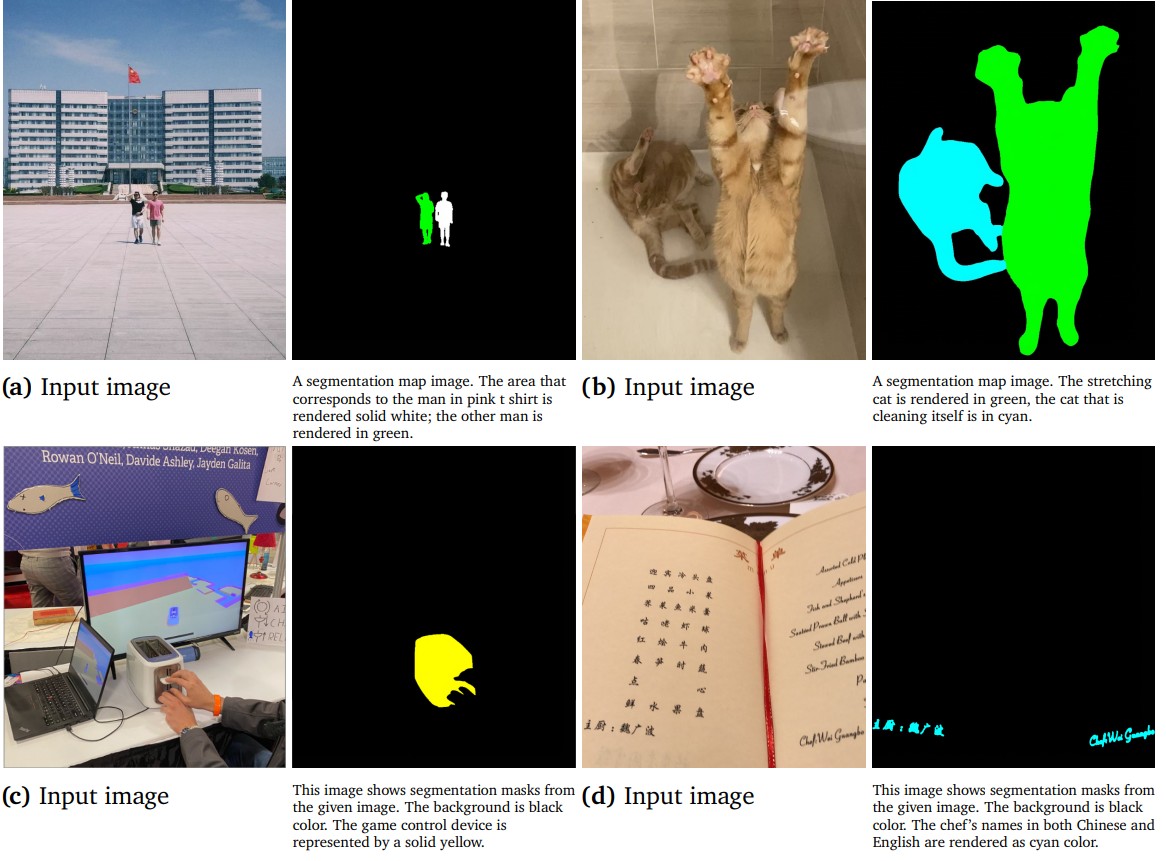
這個任務就更有趣了,因為它需要理解 free-form text query。例如「穿粉紅色 T-shirt 的男人」、「正在伸懶腰的貓」、「被當成遊戲控制器的烤吐司機」。
這正是 generative model 最大的優勢: 從預訓練繼承來的 multimodal intelligence 讓它能 reason 出 "要 segment 什麼"。
結果在 ReasonSeg 上達到 0.793 gIoU,贏過 SAM 3 Agent 的 0.770,而且還是 zero-shot transfer。
有趣的是,即使沒有特別訓練 free-form text query,Vision Banana 在 semantic 跟 instance segmentation 也能處理 referring expression,例如他可以理解 "patterns on the wall"、"crescent-shaped croissants" 是在指什麼。這顯示了 cross-task transfer 的能力。
下圖是 Vision Banana 可以理解自然語言並解釋的範例,這張圖展示的是他能夠:
- 描述一個物件的外觀("man in pink t shirt")
- 描述一個物件的動作("stretching" and "cleaning")
- 理解物件有不尋常的使用方法(toaster as a game controller)
- 理解多語言的文字內容(text on the menu in Chinese and English)
3D Understanding
Metric Depth Estimation
這是整篇論文裡我覺得最有意思的部分。Depth estimation 跟 segmentation 有個本質上的差異: depth 是一個 unbounded 的連續值 ,但 RGB color 是一個 bounded 的 3D 空間 。要怎麼把前者編碼成後者?
他們設計了一個可逆 (bijective) 的 mapping:
Step 1:用 Barron (2025) 的 power transform 把 unbounded depth 壓縮成 bounded:
其中 。這個 transform 的特性是 near-field 的 resolution 比 far-field 高,因為對機器人或 AR/VR 來說,近處的物體比較重要。
Step 2:把這個 normalized distance 沿著 RGB cube 的邊做 piecewise-linear interpolation,路徑很像第一階的 3D Hilbert curve,從黑色 (0,0,0) 走到白色 (1,1,1)。
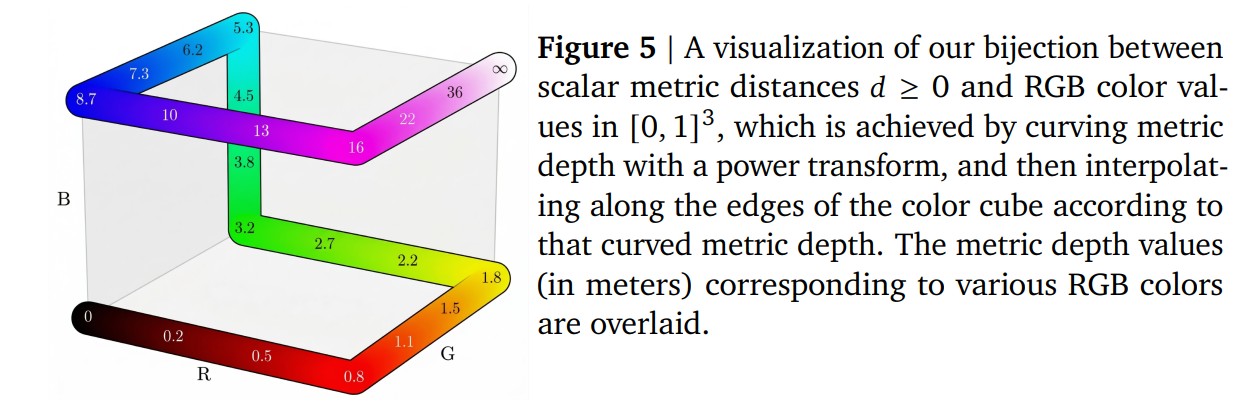
這個 mapping 是可逆的,所以他們:
- training 時把 ground-truth depth 透過這個 mapping 變成 RGB image,作為訓練 target
- inference 時把模型生成的 RGB image 投影到最近的 cube edge,然後反推回 metric depth
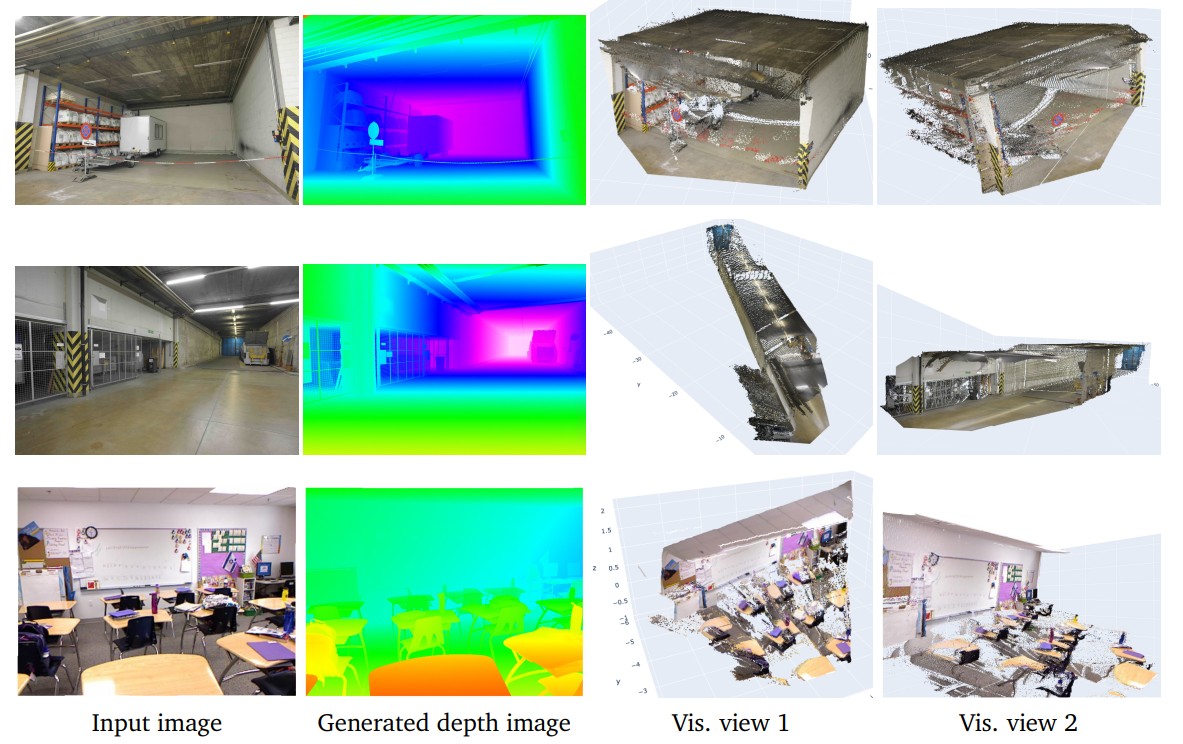
結果在 6 個 benchmark 上的 average accuracy 是 0.882,贏過 Depth Anything v3 (在他們共同的 4 個 dataset 上 0.929 vs 0.918),而且完全沒用到 camera intrinsics,也沒用任何 real-world depth data(全是 synthetic)。
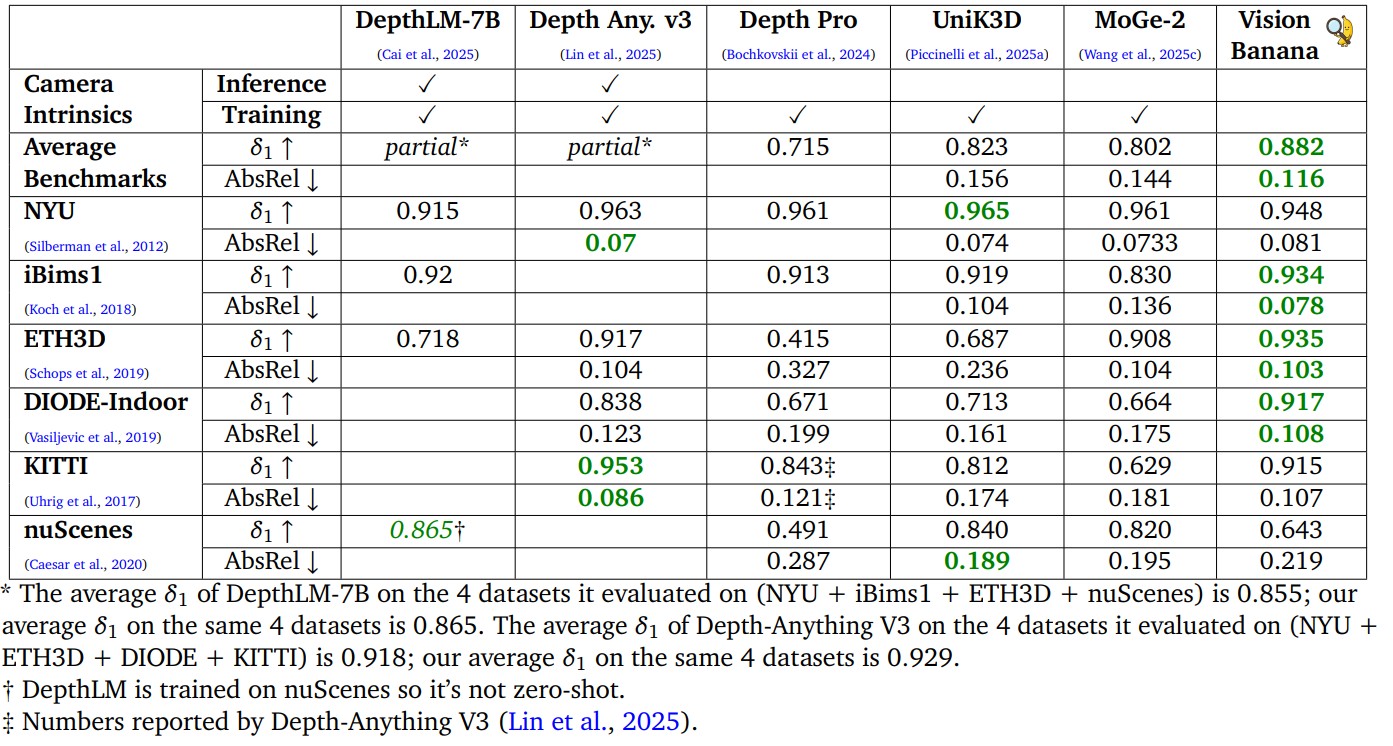
下圖是 Vision Banana 在 metric depth estimation 的範例。
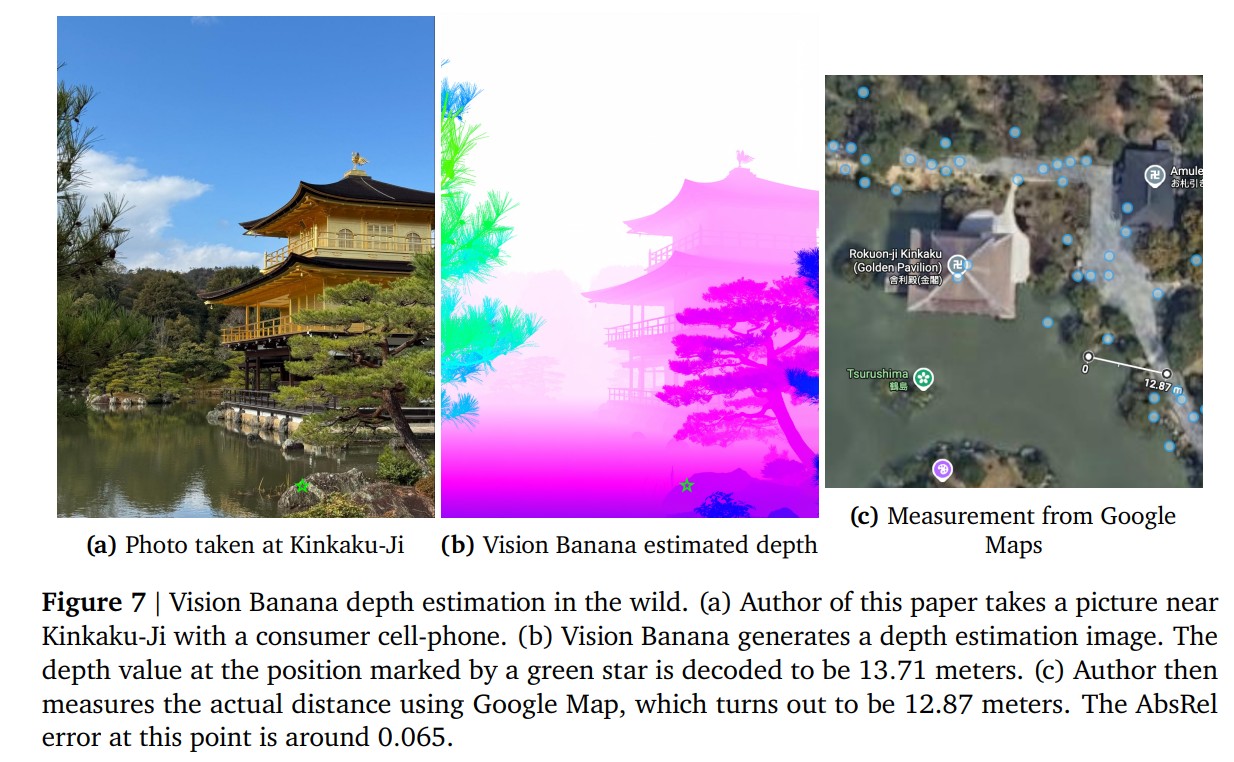
論文裡還有個有趣的 "vibe test": 作者去金閣寺拍了張照片,Vision Banana 估出綠色標記點的距離是 13.71 公尺,用 Google Maps 量出來實際是 12.87 公尺,AbsRel error 約 0.065。
Surface Normal Estimation
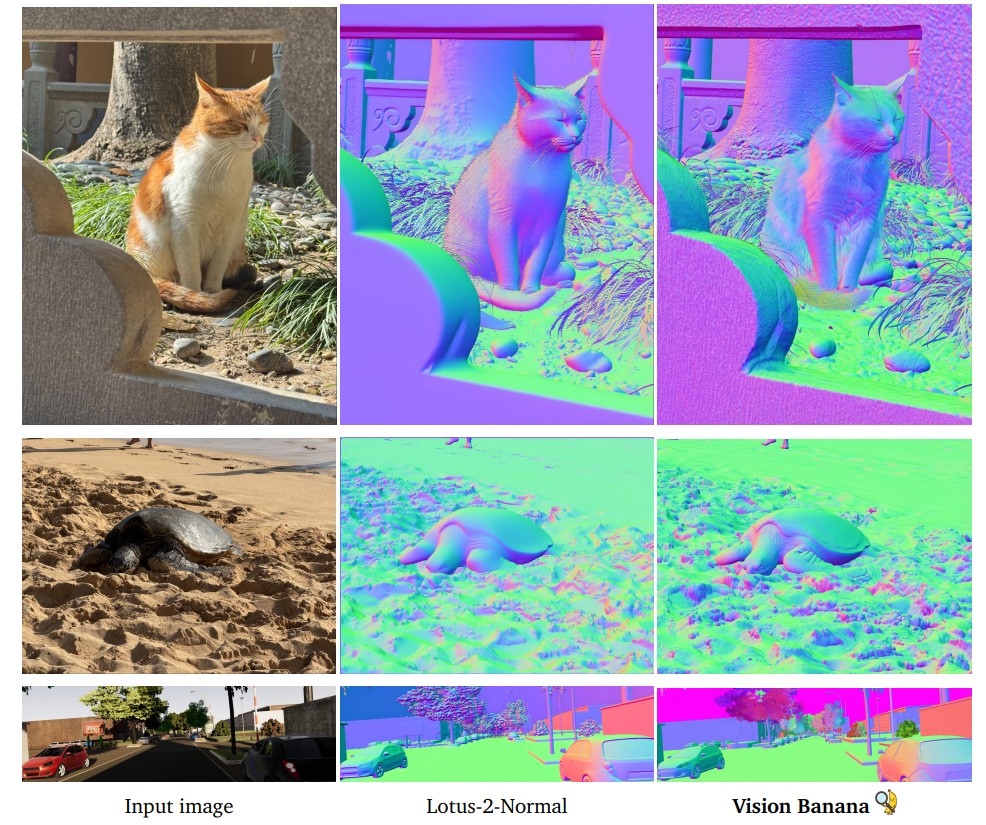
Surface normal 是個 unit vector ,跟 RGB 的對應關係非常自然,所以不需要像 depth 那樣設計複雜的 mapping。直接用 camera-space normal:
- Facing Left : Pinkish Red
- Facing Up : Light Green
- Facing Camera : Light Blue / Purple
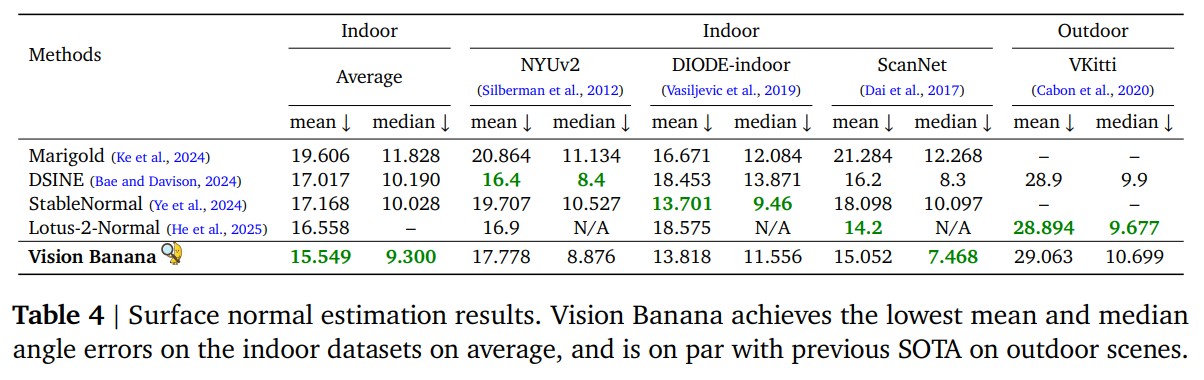
在三個 indoor dataset 上的 mean / median angle error 都是最低,贏過 Lotus-2、StableNormal、DSINE 這些專家模型。
下圖是 Vision Banana 在 Surface Normal Estimation 的範例。
保留 Generation 能力
做了 instruction tuning 之後,原本的 image generation 能力會不會被破壞?
- text-to-image (GenAI-Bench): vs Nano Banana Pro 的 win rate 為 53.5%
- image editing (ImgEdit): win rate 為 47.8%
也就是說 Vision Banana 跟原本的 base model 在生成任務上是平手的,instruction tuning 確實是 lightweight 的。
Conclusion
- Image generators 本身就是 generalist vision learners:強大的 visual understanding 能力是在 generative pretraining 過程中自然 emergent 出來的,instruction tuning 只是把這些能力 "unlock" 出來,這跟當年 LLM 顛覆 NLP 領域的故事一致
- Image generation 可以作為 vision 的 universal interface:就像 text generation 是 NLP 任務的 universal interface 一樣。所有 vision output(mask, depth, normal)都可以表達成 RGB image,prompt 中指定 visualization scheme 就可以做不同的任務
- 生成模型天生擁有處理 ambiguity 的能力:同一個 input 可能對應到多個合理的 output(例如 segmentation 中「哪一塊算是同一個 instance」是有多種合理答案的)。Discriminative model 為了避免 collapse 到 blurry mean 必須設計很 hacky 的 loss(例如 SAM 系列 output 多個 mask 但是只對其中一個算 loss),但是 generative model 本來就是在 model 整個 distribution 的,這個 ambiguity 會被自然處理
- Future work:
- 擴大 instruction-tuned 任務的多樣性,可能會 unlock 更多 cross-task generalization
- 從 monocular 擴展到 multi-view、video input
- 跟 LLM 的整合來做 cross-modality reasoning
- 降低 inference cost,因為 image generator 相較輕量的 specialist model 重太多了
Discussion
過去做 vision task 大家都各自設計專屬的架構:segmentation 要 mask decoder、depth 要 regression head、normal 要特殊的 loss function,每個任務都長得不一樣,模型之間沒辦法共享。但 Vision Banana 直接把所有 vision output 統一塑造成 RGB image,讓「圖片生成模型」本身就成了所有視覺任務的 universal interface,這個想法跟當年 GPT 把所有 NLP 任務統一成 text generation 是同一個味道,真的很有潛力。
特別是 metric depth 的設計(power transform + RGB cube 邊上的 piecewise-linear interpolation)我覺得是整篇最巧妙的地方,它解決了過去用 generation model 做 vision task 最大的痛點:生成出來的東西沒辦法被精確 decode 回 metric value 來做 benchmark。沒有這個 invertible mapping,再好看的 depth visualization 也只能停留在 qualitative 階段。
另外 generative model 天然處理 ambiguity 這點也很值得想:discriminative model 為了不 collapse 到 blurry mean,要設計各種 hacky 的 loss(SAM 系列 output 多個 mask 但是只對其中一個算 loss 就是個典型例子),但 generative model 本來就是在 model 整個 distribution 的,這個問題會被自然地解掉。
心得
看完這篇論文,我覺得 Vision Banana 的貢獻更多是體現在問題的 reframing,而不是新的演算法或架構創新。
它沒有發明新的 loss、沒有新的 module、沒有新的 architecture,純粹就是把「vision task 的輸出格式」這件事情重新想了一遍,發現只要設計得當的可逆 RGB encoding,加上一個強大的 image generator base model,就能在沒有 specialized architecture 的情況下贏過各種 specialist。
這個方向我覺得是接下來幾年 vision foundation model 很可能的主流路線,generative pretraining 的 emergent visual understanding 能力應該會越來越被重視,配合像 RGB 這種 universal output format,未來說不定真的會出現一個能做所有 vision task 的 omni model。
當然 inference cost 還是個現實問題,目前 Vision Banana 那種等級的模型應該不會直接被部署到手機或邊緣裝置上,但這就是 future work 要解的事了。